
Words, Words, Words
With the recent discussion in the news about “furloughed” employees, I decided to ask my friend, Maggie Peters, long-time HR expert and owner of HR Options, to help me understand the differences among the following employment terms. Here are her comments.
- NOTE: This is not legal advice. It is for educational purposes only. Please consult your employment attorney. The US Dept of Labor (enforces the FLSA) and the IRS (for tax withholding) provide guidance on how to distinguish between an Employee and an Independent Contractor. There are actual ‘tests’ that employers are to utilize to make sure they are classifying correctly. If an employer gets it wrong, they risk penalties, back wages (such as overtime), taxes, and benefits going several years backward. It doesn’t matter if the worker agrees to the arrangement.
Employees – think W-2; on the payroll. If working regularly 30 hours a week or more, then eligible for benefits. Employers pay payroll taxes, provide equipment, and control the employees’ schedule. Usually an on-going relationship. Often there is an employment letter or similar agreement.
Independent contractors (IC) – think 1099; not on payroll, usually paid via an invoice. Pay their own taxes and benefits; control their own schedule; use their own equipment. Usually project-based. Based on a contract or written agreement. Employers can get into trouble with government regulations if the ICs do the same work as people on payroll, as the employers are trying to avoid paying taxes and benefits which can be 20% or more of a worker’s salary.
Furlough – initiated by the organization. Basically, someone who is in limbo; not fired (yet). Their status if they return to work is up to the company and any prior agreements, such as a ‘furlough policy.’ Issues like benefits continuation, pay, paid-time-off (PTO), reporting relationships, and what if the employee finds other work can cause problems.
Leave of Absence: Similar to furlough except an LOA is initiated by the employee. It may be for Family and Medical Leave (FMLA) if they are eligible, military leave, personal leave, short-term leave, etc. LOAs also differ on how benefits and compensation work, depending upon the company’s size, policies, and benefit plans. “It depends” is the best answer :).
Salary – usually means a base, annualized pay. Salary also usually implies someone who is Exempt, meaning not eligible for Overtime pay.
Wages – include all types of compensation, such as commission, bonus, regular pay, holiday pay, overtime, PTO, sick pay, etc. A broader term than salary.
People who are let go – an involuntary termination that could be the result of a performance issue, layoff, position elimination, reduction in force, etc. Generally, someone who is let go would be eligible for Unemployment if the reason for the termination is not gross misconduct, etc.
People who are fired – same as ‘let go,’ but the wording is harsher. May be couched in phrases like “the business is moving in a different direction,” but at the end of the day, the employee is still = fired.
- From an HR perspective, turnover statistics are usually tracked and reported to executive leadership to identify hiring/firing trends. Typical codes are under the larger headings of Voluntary and Involuntary. Under Voluntary, reasons can be – retirement, resignation, pay, benefits, work/life, return to school, family, management conflict, lack of development, career change, promotion opportunity, etc.). Under Involuntary, reasons can be – lay off, restructure, performance, code of conduct violation, reduction in force, loss of contract, etc.
Contact Maggie if you have any Human Resources questions! She may be reached at [email protected].
From The Blog
When a Third-Party is involved in a Real Estate Purchase, Caution is Needed for Purchasers and Closers
According to an article in the Wall Street Journal, the number of parents who are contributing in some way to their children’s purchase of a…
HR “Speak” – Part Two
In my October, 2025, blog post (“HR” Speak – BB’s Words), my HR expert friend, Maggie Peters, gave me some language that HR people use…
Animal Groups
In honor of National Pet Month (May), here are words for groups of animals (in case you want to adopt several animals 🤗🥰.) Did you…
Books from Barbara P. Burke
Mr. Smiles® Stories
(Also available in Spanish)
-
How Mr. Smiles® Got His Name
$8.00 Select options This product has multiple variants. The options may be chosen on the product page -
Mr. Smiles® and the Power of Smiles
$8.00 Select options This product has multiple variants. The options may be chosen on the product page -

Mr. Smiles® and the Listening Lesson
$8.00 Select options This product has multiple variants. The options may be chosen on the product page -

Mr. Smiles® and Changing Cruel to Cool
$8.00 Select options This product has multiple variants. The options may be chosen on the product page -
Mr. Smiles® and the Spend or Save Question
$8.00 Select options This product has multiple variants. The options may be chosen on the product page
Title World Tales™


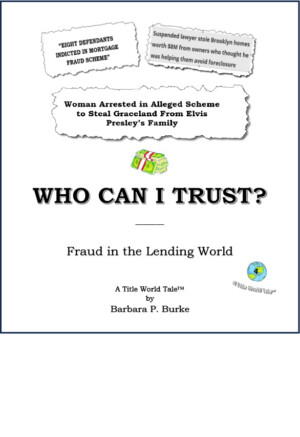
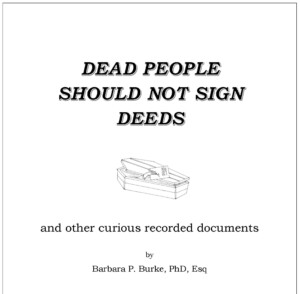
More Great Books

Persuasive Communication™ Training
Do you have a lot of thoughts but can’t seem to put them together? As the “Thought Connector,” Dr. Burke will help you organize your thoughts to best convey your message to your customers or clients.